Nostalgia Has a Price Tag — and Candy Brands Know Exactly What You'll Pay
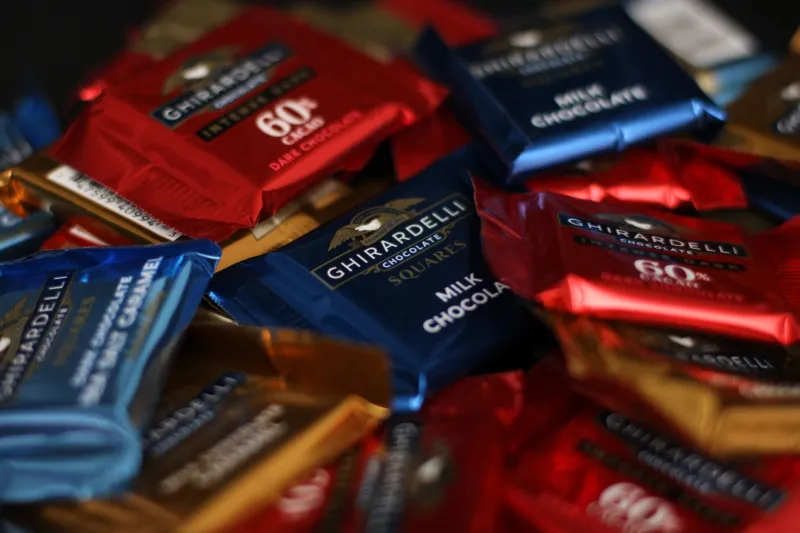
There's a particular kind of candy purchase that defies all logic. You're standing in the checkout line, you spot a bag of those old-school milk caramels — the ones your aunt used to keep in a ceramic dish by the front door — and before your brain even registers the price, they're in your cart. You get home, check the receipt, and realize you just paid $8.99 for something you could've made yourself for about $2 worth of butter and sugar.
Welcome to the nostalgia trap. And yes, candy brands built it on purpose.
The Brain Chemistry Behind That "Oh, I Remember These" Moment
Consumer psychologist Dr. Renee Hartley, who has studied emotional purchasing behavior at the University of Michigan, puts it plainly: "Nostalgia short-circuits the part of your brain that evaluates price-to-value ratios. When a sensory trigger — a smell, a taste, a specific texture — activates a positive memory, you're not making a buying decision anymore. You're trying to buy back a feeling."
That feeling, it turns out, is extremely expensive.
Milk-based candies are uniquely positioned to exploit this mechanism. The creamy, fatty richness of dairy creates what food scientists call a "long finish" — the flavor lingers, which means the memory of it lingers too. Think about how a piece of Werther's Original or a vanilla milk taffy sits on your tongue for a full minute after it dissolves. That extended sensory experience burns itself into your memory in a way that, say, a handful of gummy bears simply doesn't.
Brands know this. And they've been quietly adjusting their pricing strategies to match.
The Numbers Don't Lie
According to retail data from NielsenIQ, "heritage" and "nostalgic" candy SKUs — a category that includes wrapped milk caramels, cream-filled chocolates, and old-fashioned milk fudge — have seen price increases of between 40% and 75% over the last decade, significantly outpacing both general food inflation and the broader confectionery market.
For context, the average price of a standard candy bar has risen roughly 30% in the same period. Nostalgia-coded products? Nearly double that.
And consumers are absorbing it. A 2023 consumer sentiment survey by Mintel found that 61% of American adults said they were "willing to pay more" for a candy or sweet that reminded them of childhood, compared to just 22% who said the same about a new or unfamiliar product.
That's a massive premium just for emotional resonance.
How Brands Engineer the "Classic" Feeling
Here's where it gets a little murky. Not every premium-priced nostalgic candy is actually the same product you remember. In fact, many of them have been quietly reformulated — sometimes with cheaper ingredients — while the packaging leans harder than ever into vintage aesthetics.
Retro fonts. Sepia-toned wrappers. Phrases like "Original Recipe" or "Made the Old-Fashioned Way." These are marketing signals, not quality guarantees.
"The wrapper is doing a lot of work," says food marketing consultant James Okafor, who has advised several mid-size confectionery brands. "When you see a tin that looks like it came from 1952, your brain fills in the rest. You taste what you expect to taste, not necessarily what's actually there."
This isn't always cynical, to be fair. Some brands genuinely have maintained or improved their recipes while also raising prices to reflect real cost increases in dairy and labor. But the challenge for consumers is that there's no easy way to tell the difference from the outside of the bag.
So How Do You Know If You're Getting Ripped Off?
A few things worth checking before you drop $12 on a tin of milk candy:
Read the ingredient list, not the label art. If real cream, butter, or whole milk appears high on the ingredient list, that's a good sign the price reflects actual dairy costs. If you see "milk solids" or "dairy blend" buried near the bottom, you're mostly paying for the packaging.
Compare the serving size math. Brands sometimes shrink the net weight while keeping the package size the same — a move the internet has dubbed "shrinkflation." A bag that used to hold 12 oz might now hold 9.5 oz at the same price point.
Look for third-party verification. Artisan and small-batch milk candy makers who source local dairy or use specific regional cream often have certifications or sourcing statements on their websites. That kind of transparency usually signals genuine quality.
Give yourself a beat before buying. Seriously. If you feel a wave of warm fuzziness when you pick up the bag, wait 30 seconds. Ask yourself: am I buying candy, or am I buying a memory? Sometimes the memory is worth it. Sometimes you're just funding a marketing department's nostalgia budget.
The Artisan Angle: When Premium Actually Means Something
To be clear, not all expensive milk candy is a trap. There's a growing class of small-batch confectioners — scattered across states like Vermont, Wisconsin, and California — who are making genuinely exceptional milk-based sweets using high-quality dairy, traditional cooking methods, and real time and labor.
These producers often charge $15 to $25 for a modest box of milk caramels or cream fudge, and in many cases, the price is completely justified. The difference in texture and flavor between a properly made milk caramel — one that uses fresh heavy cream and takes 45 minutes of careful stirring — and a mass-produced version is, frankly, not subtle.
The trick is learning to tell those producers apart from the big brands that have simply dressed up their existing product in vintage clothing.
The Bottom Line
Nostalgia is one of the most powerful forces in consumer behavior, and the milk candy aisle might be its most comfortable home. There's nothing wrong with buying a treat that makes you feel six years old again — that's actually kind of beautiful. But going in with your eyes open means you get to decide when the emotional premium is worth it and when you're just being played by a very good wrapper.
Buy the artisan caramels because they're genuinely better. Buy the childhood favorite because it genuinely makes you happy. Just maybe don't let the sepia font make that decision for you.