The Coffee Table Tells All: Decoding the Great American Candy Dish

Photo: vintage crystal candy dish filled with wrapped milk chocolate candies on coffee table, via i.etsystatic.com
There's a moment we've all lived through. You're in someone's home — a relative, a neighbor, maybe your dentist's waiting room — and there it is: the dish. Crystal, ceramic, or that one wobbly plastic number shaped like a strawberry. It's full of candy, and you're being watched (maybe not literally, but spiritually) as you make your choice.
The American candy dish is more than a container. It's a social contract, a personality test, and a small act of generosity all rolled into one sticky, communal ritual. And if you look closely at what's inside, you can learn a lot about the person who stocked it.
Why the Milk Candies Always Win
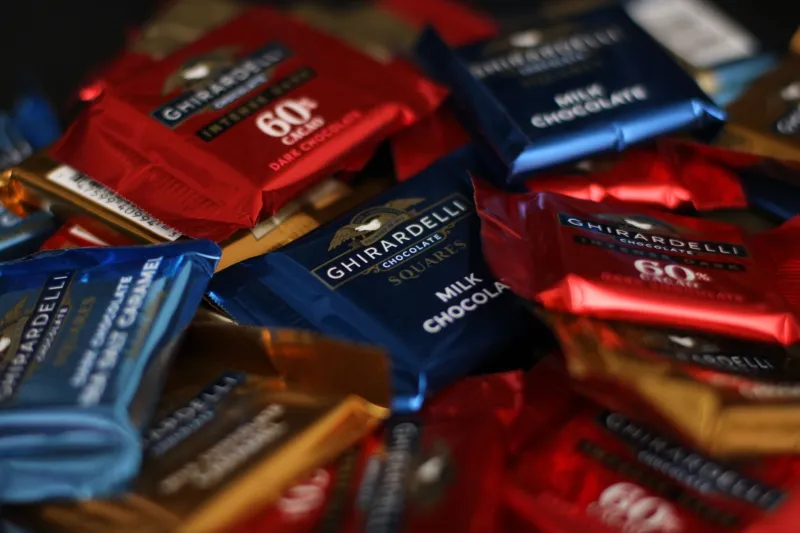
Think about what actually ends up in a communal candy dish. It's rarely dark chocolate or anything aggressively bitter. It's milk chocolate stars in foil. Caramels wrapped in waxy twist paper. Butterscotch discs. Peppermint creams. The gentle stuff.
That's not an accident. Milk-based candies are the great unifiers of the candy world — sweet, creamy, approachable, and inoffensive to just about every palate in the room. A host stocking a candy dish isn't shopping for themselves; they're shopping for the crowd. Milk candy is the crowd-pleaser that never picks a fight.
There's also a practical angle. Milk caramels and hard creams hold up on a coffee table for weeks without melting into a puddle or going stale overnight. They're built for ambient hospitality.
The Unwritten Rules of the Dish
Nobody hands you a rulebook when you walk into a house with a candy dish, but everyone somehow knows the rules:
- Take one, not a handful. Unless the host explicitly insists ("take some, please, I'm begging you"), one piece is the socially acceptable maximum on a first visit.
- Don't unwrap and reconsider. Once that wrapper is off, the candy is yours forever, even if it turns out to be the weird molasses one.
- The last piece belongs to the house. Taking the final butterscotch is a power move that borders on rude. Leave it. Let it sit there, lonely, until the host refills.
- Kids get a pass. A child raiding the dish is a child's birthright. A grown adult doing the same is a different conversation.
And then there's the dish's dark twin: the office receptionist's bowl. Same candy, different physics. There, the rules invert — you take freely, but you never, ever take the last piece on your way into a meeting you're nervous about. Bad luck is real.
What Your Dish Says About You
Candy dish curation is a form of self-expression, whether the curator admits it or not. A few archetypes we've spotted in the wild:
The Seasonal Purist. Peppermints in December, pastel creams in spring, candy corn in October. This person's dish is a calendar. They are organized, sentimental, and probably have a labeled bin in the pantry.
The Grandparent Classic. Butterscotch, strawberry bon-bons, and those hard milk-chocolate filled stars. This dish has existed since roughly 1974 and will exist long after we're all gone. It says: you are welcome here, and also I bought this candy in bulk at a warehouse club in 2019.
The Maximalist. Twelve kinds of candy crammed into one dish, plus a second dish. This host wants everyone to find their thing. They are enthusiastic, slightly chaotic, and their guest room is always ready.
The Empty Dish. Technically present, tragically bare. This person loves the idea of the candy dish more than the follow-through. We say this with love: buy a bag of caramels. It's not hard.
Why We Keep Doing It
In an era of individually portioned everything, the communal candy dish survives because it does something no snack pack can: it signals that this space is shared. Offering candy from a common dish is a tiny, low-stakes act of welcome. You don't have to say "make yourself at home" when there's a bowl of foil-wrapped milk chocolate saying it for you.
So the next time you spot that dish on the coffee table or the front desk, take a second to read it. Then take one piece. Just one. And absolutely do not take the last butterscotch.
Some rules keep civilization running.