Team Milk vs. Team Dark: The Great American Chocolate Showdown
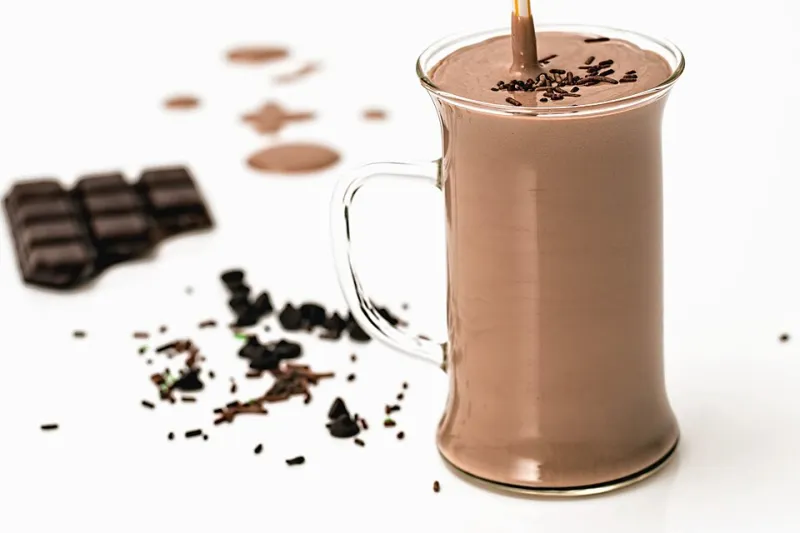
Photo: stevepb, CC0, via Wikimedia Commons
Walk into any candy shop in America and you'll witness it: the quiet standoff between two types of chocolate lovers. One reaches immediately for the silky, caramel-kissed milk chocolate bar. The other scans the shelf for something with a cacao percentage printed in bold like a badge of honor. Both are absolutely certain they've made the superior choice.
We're not here to crown a winner — okay, maybe we're a little here to do that — but mostly we wanted to understand why this divide runs so deep, and what it actually tells us about how Americans relate to sweetness, sophistication, and straight-up nostalgia.
The Numbers Don't Lie (But They Do Surprise)
We ran a quick reader poll over on our Instagram last month and asked a simple question: milk chocolate or dark? Out of just over 1,400 responses, 58% voted milk chocolate, 36% went dark, and the remaining 6% wrote in "white chocolate" with what we can only assume was chaotic energy.
What surprised us wasn't the milk chocolate lead — that tracks with national sales data, where milk chocolate consistently outsells dark in the US — it was the passion in the comments. Dark chocolate fans used words like "mature," "complex," and "sophisticated." Milk chocolate fans said things like "it actually tastes good" and "I'm not trying to prove anything to anyone." The divide is real, and it's personal.
What's Actually in the Bar?
Here's where things get interesting from a candy-making perspective. Milk chocolate, by FDA definition, has to contain at least 10% cacao and at least 12% milk solids — and that milk component changes everything. The milk proteins interact with the cacao during processing, mellowing the bitterness and introducing subtle notes of cream, butter, and even a faint caramel warmth depending on how the milk was dried before it was added.
Dark chocolate, on the other hand, skips the dairy entirely (or nearly so) and lets the cacao do all the talking. Higher cacao percentages mean more tannins, more bitterness, and a more pronounced roasted flavor. For a lot of people, that reads as complexity. For others, it reads as "why does my dessert taste like unsweetened espresso."
We chatted with Marcus Tilley, a small-batch candy maker out of Nashville who's been crafting both milk and dark bars for over a decade. His take? "People underestimate how technically demanding a good milk chocolate bar is. You've got more variables — the fat from the milk, the sweetness level, the conching time. A bad milk chocolate is aggressively bad. A great one is layered in a way most people don't even consciously notice."
That last part stuck with us.
The Nostalgia Factor Is Real
Let's be honest: a huge chunk of milk chocolate's appeal is emotional. For most Americans, milk chocolate is childhood. It's the hollow Easter bunny you ate ears-first. It's the fun-size Hershey's bar from the Halloween bucket. It's your grandma's homemade fudge, which, yes, we know isn't technically a chocolate bar, but it lives in the same warm corner of your memory.
Dark chocolate entered the American mainstream more as a grown-up pivot — something you started appreciating when you were trying to seem like the kind of person who reads labels and buys good olive oil. And there's nothing wrong with that! Palates evolve. But the cultural framing of dark chocolate as the "adult" option has done milk chocolate a quiet disservice, painting it as the unsophisticated choice when really it's just the one that doesn't need to announce itself.
Sarah Chen, a pastry chef based in Portland who runs a small bonbon business, put it perfectly: "My customers who grew up eating European-style milk chocolates — think higher cacao percentage but still with full dairy — they're not choosing milk chocolate out of habit. They're choosing it because they know what it can do."
A Taste Test, Because Of Course
We couldn't write this piece without sitting down and doing the thing. Our informal tasting panel included five people: two self-identified dark chocolate devotees, two milk chocolate loyalists, and one person who claimed to have "no strong feelings" (we don't trust them, but we included them anyway).
We tasted six bars blind — three milk, three dark — ranging from mass-market to craft. Results were genuinely messy in the best way. Both dark chocolate fans picked a milk chocolate bar as their second favorite without knowing it. One milk chocolate person rated a 72% dark bar as "surprisingly not terrible." The mass-market milk chocolate bar was ranked last by almost everyone, which felt like a lesson in the difference between nostalgia and quality.
Takeaway: when both types are made well, the conversation gets a lot more interesting than the "sophisticated vs. sweet" framing suggests.
So Who Actually Wins?
Neither. Both. It depends entirely on what you're eating and why.
Dark chocolate is extraordinary in certain applications — a thin square with a glass of red wine, a ganache where bitterness is a feature, a brownie where you want deep, almost savory undertones. Milk chocolate shines when creaminess is the whole point: a truffle center, a caramel enrober, a candy bar eaten at room temperature in a car because you deserve it.
What we'd push back on is the idea that choosing milk chocolate means you don't have a sophisticated palate. Sweetness is a flavor. Creaminess is a texture worth celebrating. And frankly, a perfectly made milk chocolate bar — smooth, with that faint cooked-dairy warmth and just enough cocoa to keep things interesting — is one of the most quietly remarkable things in the candy world.
We're biased, sure. This is Milk & Candy, after all. But we'd put a great milk chocolate bar against a great dark one any day and call it a fair fight.
Drop your allegiance in the comments. We want to know which team you're on — and whether a really good bar has ever made you switch sides.