Creamy, Silky, Velvety: A Translation Guide to the Words on the Candy Bag

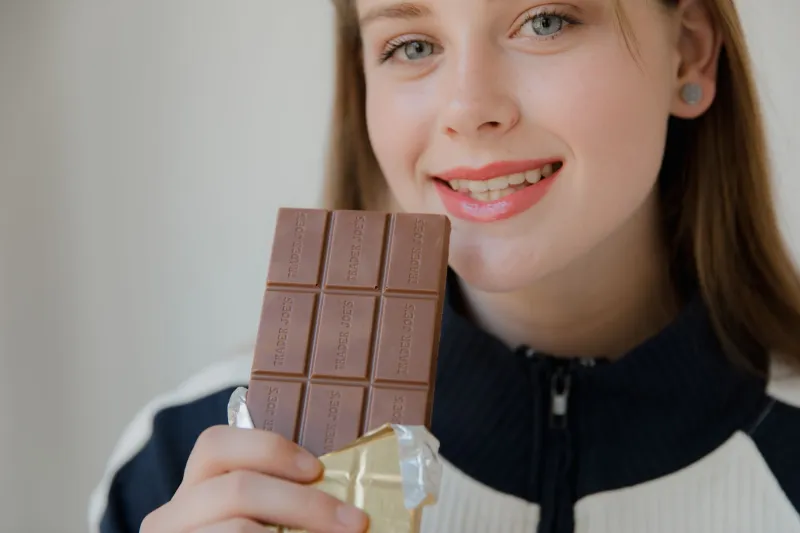
Photo by Photo by Jason Leung on Unsplash on Unsplash
Pick up any milk candy on the shelf and you'll be told, in confident script, that it is creamy, silky, velvety, rich, or indulgently smooth. Occasionally all five.
Meanwhile you get it home and the thing is… fine. Not silky. Not velvet. Just a pleasant candy that doesn't quite match the font it was printed in.
So what is a candy maker actually promising when they call a caramel “velvety”? Less than you'd hope, and more than nothing. Here's the honest decode.
The Uncomfortable News About “Creamy”
In the United States, a handful of candy terms are legally defined. Milk chocolate has a federal standard of identity: at least 10 percent chocolate liquor, at least 3.7 percent milkfat, and at least 12 percent milk solids. White chocolate has its own standard, with minimums for cocoa butter and dairy. Those words mean something specific, and a candy that doesn't hit them can't legally call itself milk chocolate.
“Creamy” is not on that list. Neither are “silky,” “velvety,” “rich,” or “luxuriously smooth.” These are what consumer-protection folks call puffery — vague, subjective, unprovable claims that regulators generally allow because no reasonable shopper reads “velvety” as a measurable guarantee. Nobody's going to win a lawsuit because a caramel was only moderately velvety.
Which means “creamy” is a mood, not a specification. It's the packaging equivalent of a compliment that costs the speaker nothing.
What Actually Makes a Candy Feel Smooth
Here's the part that's genuinely interesting, because mouthfeel is real and it's engineered.
Particle size. In chocolate, grittiness is mostly about how finely the cocoa solids and sugar are ground. Across decades of sensory research, the working threshold is around 20 to 30 microns — below that, the human tongue can't reliably separate individual particles, and the chocolate reads as smooth. Well-conched milk chocolate is ground finer than that. Cheaper bars land right at the edge, which is why some chocolate feels faintly sandy on the roof of your mouth.
Fat. Cocoa butter melts right around body temperature, roughly 90 to 95°F, which is why good chocolate seems to collapse rather than chew. Milkfat plays a similar role in caramels, toffee, and cream fillings: it coats the tongue and slows the release of sugar, so you register sweetness as rounder and softer instead of sharp.
Emulsifiers. Lecithin and similar ingredients keep fat and water from separating, and they also thin out the chocolate so it flows properly during manufacturing. Too much and you get a slightly slippery, almost soapy mouthfeel. Too little and the texture gets claggy.
Moisture and crystallization. A caramel that feels creamy rather than grainy got its sugar crystals kept small, usually through careful cooking and the addition of corn syrup or another crystallization inhibitor. In fudge, the difference between silky and “sugar paste” is entirely a crystallization story.
Temperature. Store a candy at 60°F and it may feel waxy and dull. Same candy at 70°F and it feels lush. This is the single biggest reason two people can eat the same milk chocolate and disagree completely.
The Word-by-Word Translation Table
“Creamy” — Almost always signals dairy fat or milk powder plus fine particle size. On a caramel, expect butter or cream in the ingredient list. On a chocolate, expect real milkfat rather than whey alone.
“Silky” or “velvety” — Usually a texture claim about surface: a panned coating, a polished shell, a filling whipped to incorporate air. Velvet is also a favorite word for chocolate with higher fat and longer conching.
“Rich” — Vague, but often correlates with more fat, more cocoa, or a stronger dairy flavor. Read it as “do not eat six.”
“Smooth” — Could mean fine-ground, or could mean “we removed everything that had a flavor opinion.” Genuinely ambiguous.
“Buttery” — Ideally means actual butterfat. Sometimes means added flavor compounds that read as buttery. A peek at the ingredients settles it in about four seconds.
“Soft and chewy” — A real, structural claim driven by gelatin, corn syrup, glycerin, or other humectants that hold onto water. This one tends to be honest because you can feel it instantly.
“Chocolatey” or “chocolate-flavored” — Not a compliment. These terms appear when a product doesn't meet the standard of identity for real chocolate and is being careful about it.
How to Shop Past the Front of the Bag
Flip it over. In three moves you can usually tell whether the front copy is earned:
- Check the first three ingredients. If milk, cream, or whole milk powder appear early, the creaminess is structural. If the fat is mostly palm oil and whey, it's going to finish thin no matter what the foil says.
- Look for real chocolate terms. “Cocoa butter” is a good sign. “Hydrogenated palm kernel oil” in a chocolate-flavored coating is a different product pretending to be the same one.
- Compare price per ounce, not price per bag. Candy packaging shrinks and reseals in ways that make the sticker price lie.
The Takeaway
“Creamy” isn't a lie, exactly — it's an adjective doing freelance work. The candies that genuinely deliver get there through fat, fine grinding, careful cooking, and a temperature-controlled supply chain, none of which is visible on the front of the wrapper.
The good news: your mouth is a better fact-checker than any label. Buy the small size first. Let it sit at room temperature for ten minutes. Then decide whether the word on the bag was a promise or a vibe.