Unwrapped by History: How the Year You Were Born Shaped the Milk Candy You Love
There's a reason your grandma swears by those waxy, paper-wrapped caramels that come in the big cellophane bags, and your college roommate is obsessed with single-origin milk chocolate bars from a Brooklyn chocolatier. It's not just personal taste. It's history. The milk candy you reach for first — the one you'd grab in a gas station at midnight without even thinking — was basically chosen for you before you were old enough to hold a dollar bill.
American confectionery has always moved in lockstep with the broader culture. Economic booms, wartime rationing, the rise of television, the internet, the farm-to-table movement — all of it left a mark on what showed up in candy dishes, lunchboxes, and holiday stockings across the country. Your birth year is basically a coordinate on a very delicious map.
The Post-War Sugar Rush (Born 1945–1960)
If you came into the world in the years right after World War II, you arrived during one of the most significant sugar booms in American history. Wartime rationing had kept candy out of reach for years, and when restrictions lifted, manufacturers went all in. Milk caramels — smooth, buttery, endlessly chewable — became the defining treat of this era. Brands leaned hard into dairy-rich formulations because milk was abundant, affordable, and felt like a symbol of domestic prosperity.
Kids born in this window grew up treating caramels as almost a birthright. The candy wasn't exotic or artisanal. It was just there, in every corner store, every grandparent's coat pocket. That accessibility shaped a preference for familiar, uncomplicated sweetness that many Baby Boomers still carry today. Ask someone born in 1952 what their desert island candy is, and there's a solid chance it involves caramel wrapped in wax paper.
The Television Generation's Sweet Spot (Born 1961–1975)
The rise of Saturday morning cartoons changed everything. For kids growing up in the '60s and '70s, candy wasn't just something you ate — it was something you watched. Advertising budgets exploded, and milk chocolate brands competed for precious screen time. This era produced some of the most iconic milk-based candy marketing in history, and those jingles burned themselves into a generation's memory permanently.
Milk chocolate bars with creamy fillings — nougat, caramel rivers, crackly rice — became the dominant format. The candy industry understood that kids wanted texture and surprise, not just sweetness. If you were born somewhere in this stretch, there's a good chance your candy nostalgia is less about a single flavor and more about a specific experience: the snap of foil, the pull of a caramel center, the specific weight of a candy bar in your Halloween bag.
This was also the decade when individually wrapped milk candies really took over. Convenience was king, and individually portioned treats fit perfectly into the growing on-the-go American lifestyle.
Mall Culture and Candy Explosion (Born 1976–1985)
Millennials (the older ones, anyway) were born into a candy landscape that was, frankly, a little chaotic in the best possible way. The American mall was at its cultural peak, and specialty candy stores became a genuine destination. Milk-based treats diversified wildly — white chocolate entered the mainstream, flavored milk caramels started showing up, and international influences began creeping into the candy aisle.
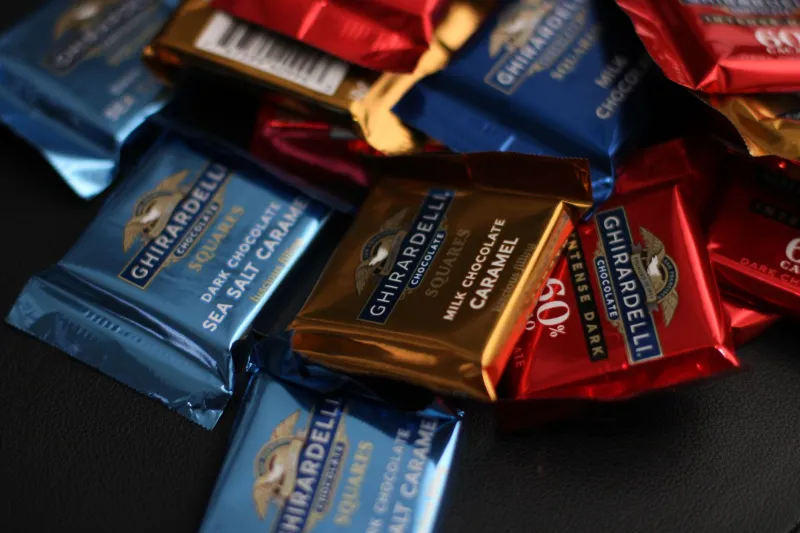
This generation also grew up right as premium branding started to matter in the candy world. The idea that a milk chocolate bar could be fancy — that it could come in a sleek box and be given as a gift — took root during these years. If you were born in 1980, you probably remember the exact moment a family member gave you a box of individually wrapped milk truffles and it felt genuinely adult and special.
The '80s candy experience was about abundance and novelty. New formats, new flavors, new textures. The milk candy world was expanding, and kids born in this window got to watch it happen in real time.
The Nineties Nostalgia Factory (Born 1986–1996)
Here's the thing about '90s candy culture: it was loud. Flavors were intense, packaging was aggressive, and the milk candy world responded by leaning into creaminess as a kind of counterbalance. Smooth, rich, almost-too-sweet milk chocolate became a comfort against the chaos of extreme flavors dominating the snack aisle.
This is also the era when milk caramel made a quiet comeback as an ingredient rather than a standalone candy. Caramel drizzles, caramel cores, caramel-dipped everything. If you were born in the early '90s, there's a decent chance your foundational milk candy memory involves pulling apart something caramel-stuffed and watching it stretch impossibly far.
And then there was the internet. By the time '90s kids were teenagers, candy reviews were becoming a thing online. The idea that you could discover a milk candy from another country — Japanese milk caramels, European milk chocolate bars — through a forum post or early YouTube video changed the relationship between this generation and imported sweets in a way that no previous cohort had experienced.
The Artisanal Awakening (Born 1997–2010)
Gen Z arrived just as the artisanal food movement was hitting its stride, and the milk candy world was not immune. Small-batch caramels made with locally sourced cream. Bean-to-bar milk chocolate with tasting notes printed on the wrapper. Dulce de leche in every format imaginable. The candy aisle got a lot more interesting — and a lot more expensive — during the years these kids were forming their sweet preferences.
For younger Gen Z, the discovery of milk candy often happened through social media rather than a physical store. A TikTok video about Korean milk candies or a viral post about a regional American caramel brand could move product faster than a national ad campaign. This generation's milk candy relationship is arguably the most globally informed of any in American history.
They also grew up with a higher baseline expectation for ingredient quality. If a milk caramel doesn't have real cream listed near the top of the ingredient list, younger consumers notice — and they'll say so in the comments.
What Your Candy Craving Is Really Telling You
Here's the fascinating thing: the milk candy you love isn't just about flavor preference. It's a kind of edible autobiography. The texture you find most comforting, the level of sweetness that feels right, whether you want your candy wrapped in foil or a sleek modern package — all of it connects back to the cultural moment you were born into.
Post-war kids learned to find joy in simple caramel abundance. Television-era kids learned that candy could be an event. Mall-generation candy lovers learned that premium and everyday could coexist. '90s kids learned that creaminess is its own kind of comfort. And the newest generation learned that where your milk comes from actually matters.
None of these lessons are wrong. They're just different timestamps on the same sweet timeline.
So the next time you reach for that specific candy — the one you've loved since you were a kid, the one that just tastes like home — take a second to think about what was happening in the world when that preference first took shape. Chances are, history had a hand in it. And honestly? That makes it taste even better.