Vintage Wrappers, Real Money: Inside the Wild Resale Market for Discontinued Milk Candies
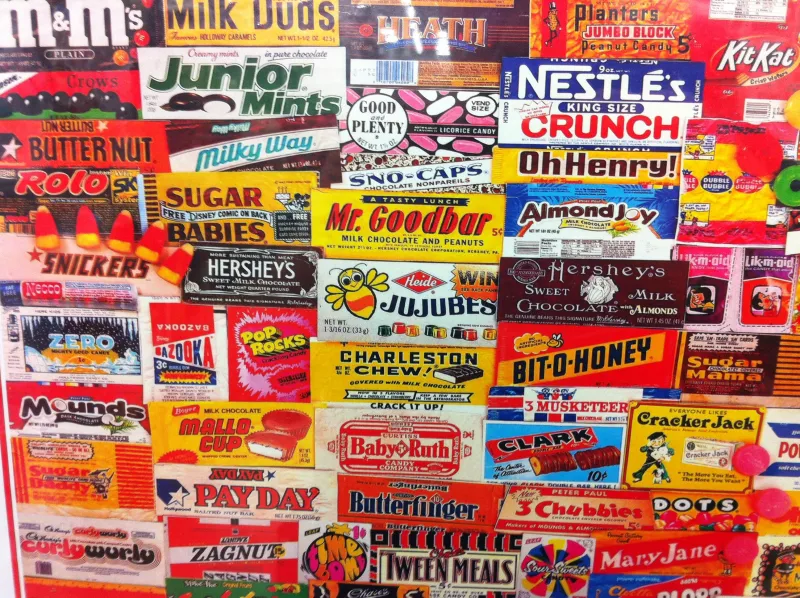
Photo: vintage candy bar wrappers collection retro packaging, via i.pinimg.com
Somewhere in a climate-controlled storage unit in suburban Ohio, there are three sealed boxes of Milky Way Lite bars from 1995. Their owner, a 38-year-old named Derek who asked us not to use his last name, bought them at an estate sale for $40 total. He's been offered $600 for the lot. He hasn't sold.
"It's not really about the money at this point," Derek told us over the phone, laughing a little at himself. "It's about having something that basically doesn't exist anymore. That feels like something."
That feeling — that hard-to-name mix of ownership, memory, and scarcity — is quietly fueling one of the stranger corners of the American food economy. The resale market for discontinued and hard-to-find milk candies has exploded over the past five years, turning old wrappers and forgotten flavors into collectibles that rival vintage sneakers and baseball cards in terms of emotional value and, sometimes, actual dollar figures.
The Candy Grail Hunt
If you haven't spent time on eBay's candy listings lately, prepare yourself. Sealed packages of discontinued treats like Reggie! Bars, Marathon Bars, and Whatchamacallit variations from the '80s regularly list for anywhere from $30 to well over $200. Opened wrappers — just the packaging, no candy — sell briskly too. A pristine Marathon Bar wrapper from the early 1980s recently fetched $85. An unopened Hershey's bar from a limited 1970s regional run? Try $300.
The sellers aren't always hoarders or estate sale scavengers. A growing number are deliberate resellers who track discontinued products the way sneakerheads track limited releases. They monitor manufacturer announcements, buy in bulk when a product gets its discontinuation notice, and sit on inventory while demand climbs.
"The window right after a discontinuation is announced is golden," explains Tanya, a 34-year-old reseller based in Atlanta who operates under the handle @CandyVaultTanya on social media. "People panic-buy, prices spike, then they settle. If you're patient, they climb again as supply dries up."
Tanya treats her candy inventory with the same logic she'd apply to any commodity market. She photographs everything, stores sealed items away from light and heat, and keeps detailed spreadsheets. Her most prized possession is a still-sealed 12-pack of Hershey's Swoops — the Pringles-shaped chocolate wafers discontinued in the mid-2000s — which she won't price below $250.
Why Milk Candy, Specifically?
Not all discontinued food products inspire this kind of devotion. Discontinued cereals have their fans, sure, and there's a modest market for vintage soda cans. But milk-based candies — chocolate bars, caramels, cream-filled confections — seem to occupy a uniquely tender spot in American memory.
Part of it is tactile. The creamy melt of milk chocolate, the pull of a caramel center, the cool snap of a white chocolate coating — these are sensory experiences encoded in childhood in a way that, say, a discontinued cracker just isn't. When a milk candy disappears, it doesn't just leave a gap on the shelf. It closes a sensory door.
"Taste memory is incredibly powerful," says food psychologist Dr. Lena Marsh, who studies consumer nostalgia. "Milk fat in particular is associated with comfort and early nurturing experiences. When a product tied to those memories disappears, the loss can feel genuinely personal, even grief-adjacent."
That grief creates demand. And demand, when supply is fixed and shrinking, creates a market.
Social Media as the Accelerant
The resale market for vintage candy existed before TikTok and Instagram, but it was slow and mostly underground — eBay listings, niche collector forums, the occasional yard sale find. Social media didn't create the nostalgia, but it turbocharged it in ways nobody fully anticipated.
When a food creator posts a video reacting to a discontinued candy — biting into a decades-old Reggie! Bar with reverence, or just holding up a vintage wrapper and saying "I would literally pay anything for this right now" — the comment sections light up with thousands of people sharing the same memory. That collective longing is visible, measurable, and it drives people to search eBay within minutes.
Tanya says her best sales days are almost always the day after a nostalgia-heavy candy video goes viral. "Someone posts about missing Marathon Bars, I wake up to 40 messages asking if I have any. It's like clockwork."
Brands have noticed. A handful of companies have used the secondary market as a real-time focus group, watching which discontinued products command the highest resale prices before deciding what to bring back. The revival of Surge soda is the most famous example of social demand driving a resurrection, but candy brands are increasingly paying attention to the same signals.
The Ethics of Candy Speculation
Not everyone is charmed by this market. Some longtime candy collectors bristle at the newer wave of resellers who they see as treating cultural artifacts like pure financial instruments.
"There's a difference between a collector and a speculator," argues Marcus, a 52-year-old collector from Portland who has been cataloging vintage candy packaging since the '90s. "I'm preserving history. Some of these newer sellers are just flipping sentiment for profit."
There's also the straightforward consumer frustration angle: when a candy gets a limited reissue or a regional retailer clears out old stock, resellers can vacuum up supply before regular fans even know it's available, then mark it up 400 percent on secondary platforms. It's the same dynamic that made sneaker reselling so controversial, transplanted into the candy aisle.
And then there's the question of what you're actually buying. Candy isn't wine. It doesn't improve with age — in fact, it degrades. A 30-year-old chocolate bar, even sealed, is almost certainly not going to taste the way you remember it. The value is entirely symbolic, which is either beautiful or absurd depending on your perspective.
What We're Really Buying
Derek, back in Ohio with his Milky Way Lites, understands this perfectly. He has no intention of eating them.
"It's not about the candy," he admits. "It's about being nine years old again, even just for a second. Having that box means that version of me still exists somewhere."
That's the real product being traded in this market. Not chocolate or caramel or cream. Not even the wrapper. It's a moment — a specific, irretrievable slice of childhood — packaged in foil and sugar and milk fat, preserved behind glass, and priced accordingly.
The nostalgia economy is real, it's growing, and apparently, it tastes like a discontinued candy bar you can buy for $200 but probably shouldn't eat.